
Panoramic Canadian Rockies
Vancouver
11 nights
From
£3,969
pp

How to Spend 48 Hours in Victoria, BC
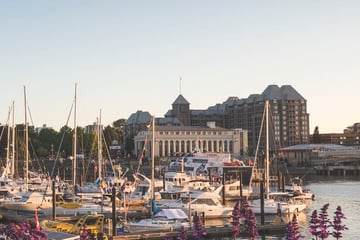
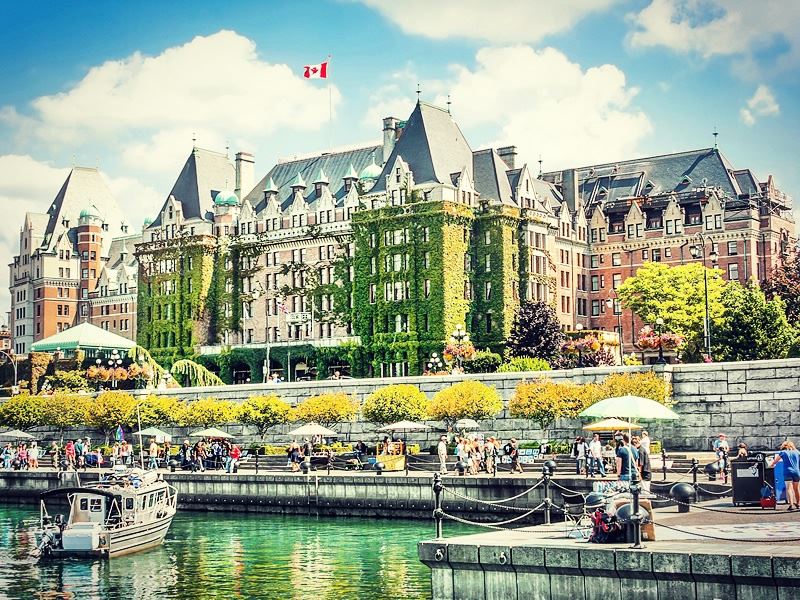
There's a moment on your first morning in Victoria that tends to stop people in their tracks. You're standing on the Inner Harbour promenade, coffee in hand, watching a floatplane bank low over the water as a harbour seal pops its head up between the fishing boats. Behind you, the ivy-covered Fairmont Empress glows in the early light. In front of you, the Pacific. It's the kind of scene that makes you wonder why you didn't come sooner.
We've been sending travellers from the UK and Ireland to Victoria for years, and it never disappoints. Perched on the southern tip of Vancouver Island, this is a city that manages to feel both grand and genuinely unhurried — a rare quality. It has elegant Victorian architecture, one of North America's best urban whale watching scenes, a food culture punching well above its size, and a harbour that's simply one of the most photogenic in Canada. Two days here will feel like far more. Here's how we'd spend them.
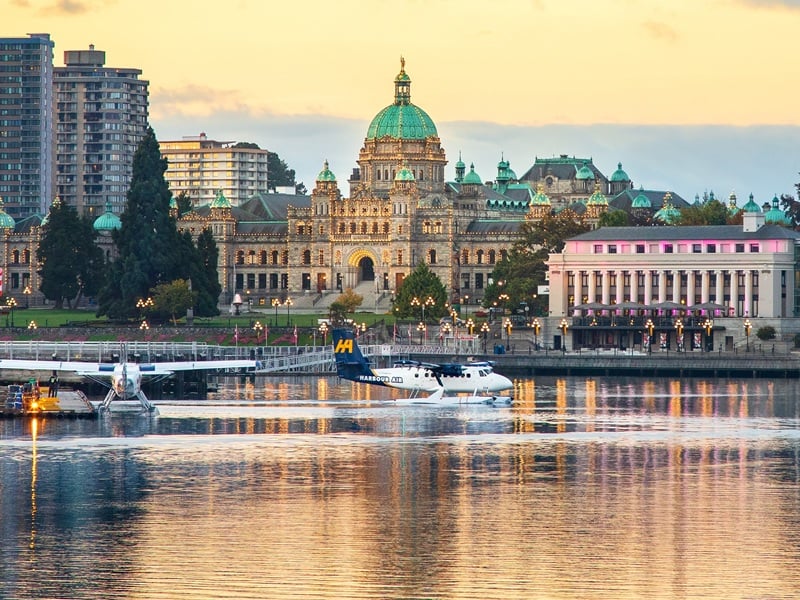
Day 1, Morning: Start Where the City Begins — the Inner Harbour
Arrive early if you can. The Inner Harbour before 9am belongs to cyclists, dog walkers and the odd ambitious jogger, and the light at that hour does something extraordinary to the water. Give yourself time to simply walk the promenade before the tour boats start filling up.
The Fairmont Empress is the obvious first stop — this is the hotel that has defined Victoria's skyline since 1908, and even if you're not staying (though it's a wonderful splurge if your budget allows), the lobby is worth five minutes of your time. The soaring ceilings, the dark wood panelling, the faint scent of old money and fresh flowers — it's a proper grand hotel, and they've kept it that way. If you want to do it justice, book afternoon tea in advance. It books up fast, particularly in summer, and it's genuinely one of those experiences that justifies the price.
Directly across from the hotel, the British Columbia Parliament Buildings are well worth an hour. Free guided tours run throughout the day and cover everything from the province's political history to the building's remarkable Edwardian architecture. The inner dome is particularly impressive — most visitors don't realise how ornate it is until they're standing beneath it.
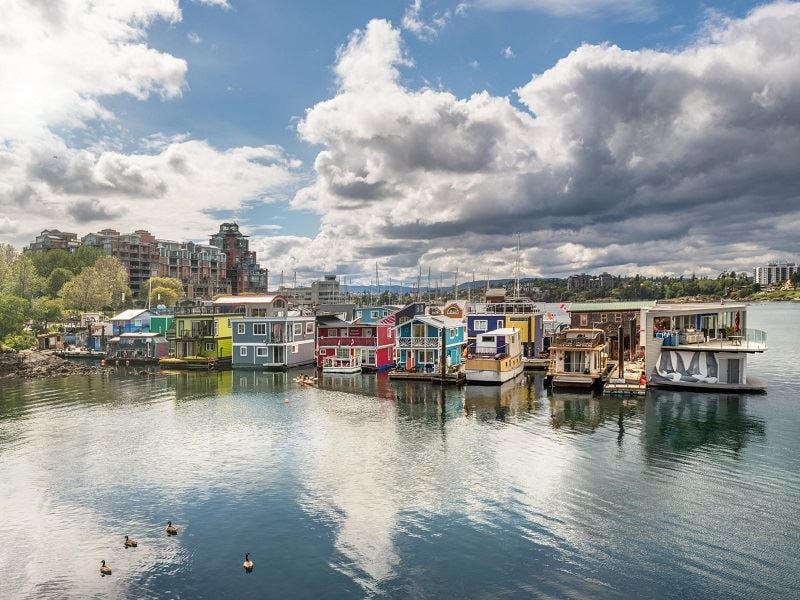
From here, follow the waterfront south toward Fisherman's Wharf. It's a 15-minute walk that takes you past buskers, bobbing harbour ferries and some extremely photogenic houseboats — many of them decorated with flower boxes and hand-painted signs that look like they belong in a storybook. This is Victoria's more playful, slightly eccentric side, and it's all the better for it.
For lunch, eat here rather than heading back into town. The kiosks at Fisherman's Wharf aren't fancy, but the seafood is fresh and the portions are generous. A crab roll from one of the waterside stalls, eaten on a dock while a seal begs from below — it doesn't get much more Victoria than that.
Day 1, Afternoon: Whale Watching on the Salish Sea
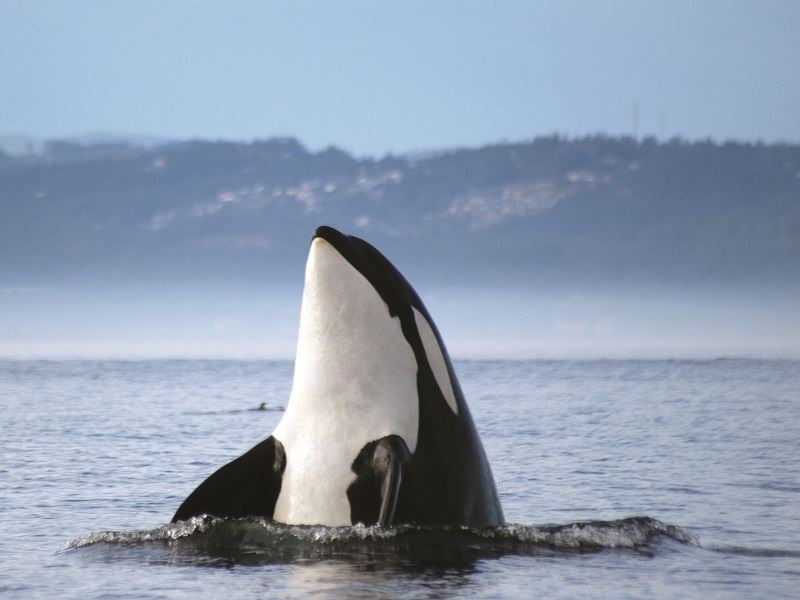
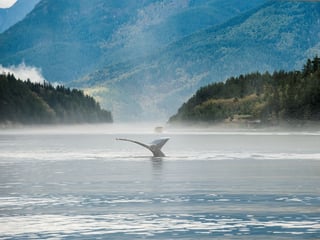
This is, for many of our travellers, the highlight of the entire Canada trip. Victoria's position on the Salish Sea makes it one of the best places in North America to see whales, and the range of what you might encounter is genuinely extraordinary — resident orca pods, humpbacks, minke whales, even grey whales on migration. We've heard from guests who've seen six orcas in a single outing and others who've been treated to a humpback breaching less than thirty metres from the boat. These aren't staged wildlife encounters. They're the real thing.
What many first-timers don't appreciate is how quickly the city disappears behind you. Within twenty minutes of leaving the harbour, you're in open water with the Olympic Mountains in the distance and nothing but ocean ahead. The guides on these trips — typically marine biologists or trained naturalists — are excellent, and their knowledge of individual whale families and migration patterns adds a layer of depth that makes the whole experience richer.
A few practical notes from years of booking these trips: bring more layers than you think you'll need. Even in July, the wind on open water can be biting, and being cold distracts from the experience. Most reputable operators provide waterproofs, but a warm mid-layer underneath is your responsibility. The best departures are generally morning or early afternoon when sea conditions are calmest. At Canadian Sky, we work with operators whose safety standards and naturalist credentials we've personally verified — it matters more than it might seem.
Day 1, Evening: Eating Well by the Water
Victoria's food scene has quietly become one of the best on the west coast of Canada. The combination of Pacific seafood, farms in the nearby Saanich Peninsula, and a genuine culture of independent, chef-driven restaurants means that eating well here is easy. The trickier thing is choosing where.
Government Street and the surrounding streets have a concentration of good restaurants within comfortable walking distance of the harbour. You're looking for anything that leans into the local catch — Pacific halibut, Dungeness crab, spot prawns in season — rather than menus that could be anywhere.
After dinner, don't rush back to your hotel. The Parliament Buildings illuminate at dusk and their reflection in the harbour is one of those views that photographs terribly and looks magnificent in person. Find a bench, watch the last ferries cross the water, and let the day settle. First days in Victoria tend to feel longer than they are, in the best possible way.
Day 2, Morning: Butchart Gardens
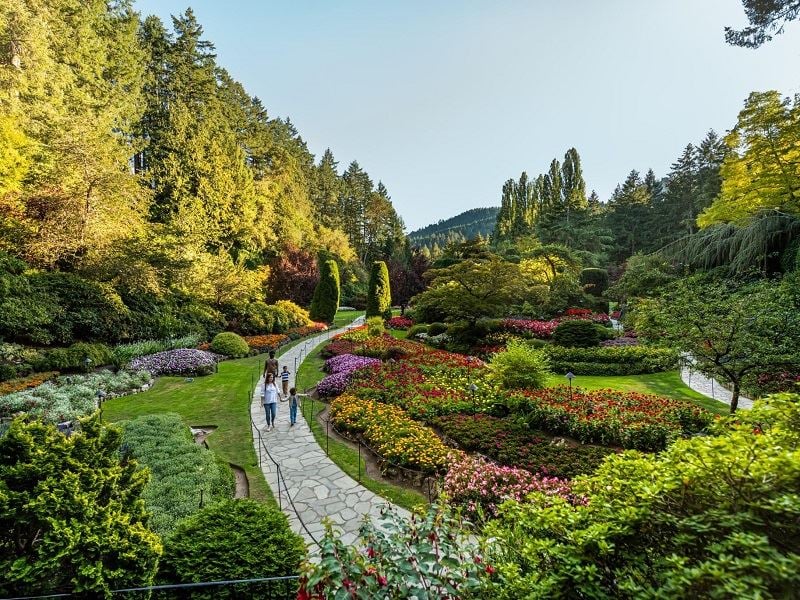
Set your alarm. Butchart Gardens rewards early arrivals — the light is softer, the crowds are thinner, and the scent of the rose garden on a still morning is something you'll remember for years. The drive from downtown is about 30 minutes along the Saanich Peninsula, and it's a pleasant one: rolling farmland, ocean glimpses, a very un-rushed pace.
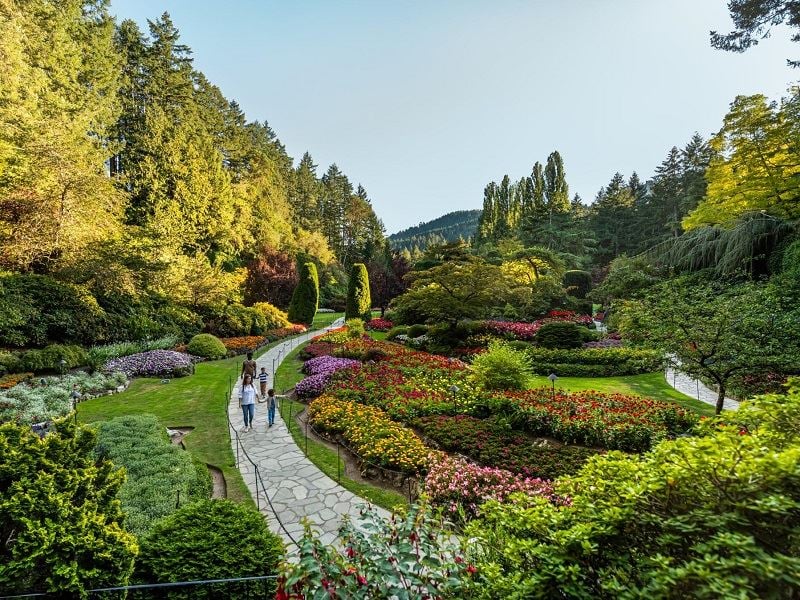
The gardens cover 55 acres and were created by Jennie Butchart in the early 1900s, gradually transforming an exhausted limestone quarry into what is now a National Historic Site of Canada. The Sunken Garden — built directly into that former quarry — is the centrepiece, and in spring and summer when the dahlias and begonias are at their peak, it's genuinely breath-taking in a way that feels slightly embarrassing to admit until you see it. The scale, the colour, the way the planting tumbles down the quarry walls — it earns every superlative thrown at it.
Allow two hours at minimum, more if you're a keen photographer or want to sit quietly and take it all in. The Japanese Garden and Italian Garden each have a distinct mood — serene versus formal — and are worth the detour even when the main beds are between seasons. In winter, the gardens are transformed with festive light displays, and autumn visits have a quieter melancholy that appeals to a different kind of traveller entirely.
Day 2, Midday: Explore Downtown Victoria Properly
Back in the city, resist the urge to simply retread yesterday's ground. The part of Victoria that many visitors miss is the streetscape beyond the waterfront — and it's genuinely worth your time.
Head to Government Street and Johnson Street for independent boutiques, local bookshops and the kind of unhurried retail that's increasingly hard to find. Victoria has a strong coffee culture rooted in genuinely good independent cafes rather than chains — take your time choosing one, sit down properly, and watch the street for a while. The pace here is different. People stroll. Conversations happen. You start to understand why people who visit Victoria often end up moving here.
Bastion Square, just a few minutes' walk from the harbour, is one of our favourite spots in the city — a pocket of beautifully preserved Victorian and Edwardian brick buildings that give a real sense of what this place was like during the gold rush years of the 1850s and 60s when Victoria was a major provisioning port. It's the kind of detail that puts the rest of the city in context.
Day 2, Afternoon: Beacon Hill Park and the Dallas Road Coastline
This is where Victoria shows you its other side — the one that residents actually live in, rather than the one designed for visitors.
Beacon Hill Park is a ten-minute walk from downtown and covers an enormous stretch of green space: manicured gardens giving way to open meadows, duck ponds, ancient Garry oak trees, and a cricket pitch that wouldn't look out of place in the English Home Counties (the British influence here runs deep). In spring, the park's famous beds of daffodils and camas wildflowers are extraordinary.
Continue south through the park to Dallas Road, where a coastal path follows the shoreline above rocky beaches and kelp-tangled coves. On a clear afternoon, the view across the Strait of Juan de Fuca to the snow-capped Olympic Mountains is the kind of view that makes you reach for your phone and fail to capture it properly. If you've hired bikes — which we'd recommend — this stretch of coastline is one of the most pleasant cycling routes in all of British Columbia.
Take your time here. This is the part of the day when Victoria stops feeling like a destination and starts feeling like somewhere you actually want to live.
Day 2, Evening: A Last Drink, and a Final Look at the Harbour
Victoria's craft drinks scene has expanded considerably in recent years. The city and surrounding region now supports a genuine ecosystem of independent breweries, cideries and distilleries, many drawing on Vancouver Island's agricultural produce and Pacific botanical ingredients. A cider made from Saanich Peninsula apples or a gin distilled with local kelp and spruce tips isn't a gimmick here — it's a genuine reflection of where you are.
Find somewhere with a tasting flight and small plates, settle in, and give yourself the evening. There's no need to rush.
Before you call it a night, walk back to the Inner Harbour one final time. By now you'll know the rhythm of it — the ferries, the seaplanes making their last runs of the day, the Parliament Buildings lit in gold. It's a harbour that looked after you well for 48 hours, and it's worth a proper goodbye.
Planning Your Victoria Visit: What We've Learned
Best time to visit: June to September for the best whale watching and warmest weather. Late spring (May) is beautiful for Butchart Gardens with fewer crowds. Winter visits are quieter and can be genuinely atmospheric — just accept that whale sightings are less predictable.
Getting there from the UK and Ireland: Most travellers fly into Vancouver and take the BC Ferries crossing to Swartz Bay (around 90 minutes, and the ferry itself is an experience worth savouring) or a short floatplane from Vancouver Harbour directly to Victoria's Inner Harbour — which is one of the more dramatic arrivals in Canadian travel.
How to book: Victoria works best when it's part of a broader Vancouver Island or British Columbia itinerary. At Canadian Sky, we can build a Victoria stay into a wider Canada journey, connecting it with Tofino, the Cowichan Valley wine region, or a Rocky Mountain extension. Our Canada specialists have been there, know the operators personally, and can help you avoid the common pitfalls — including booking whale watching with companies that don't have the naturalist credentials they claim.
Two days in Victoria never quite feels like enough. That's probably the highest compliment you can pay a city.
Suggested Itineraries:
Encounter BC - Vancouver and Victoria
Vancouver, Whistler and Victoria

Sign up to our newsletter
Be the first to know about our exclusive offers and holiday inspiration by email.