

Eastern Discovery
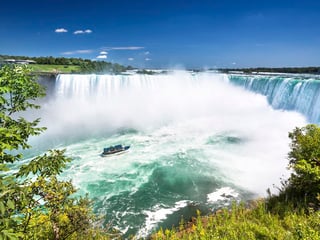
Niagara Falls
10 Nights
From
£2,399
pp


48 Hours in Ottawa: Canada's Capital City, Whatever the Season
Mention Ottawa on a Canada itinerary and it is often treated as a pit stop: a night between Toronto and Montreal, a quick look at Parliament Hill, then back on the road. It is an easy mistake to make, and one we would gently urge you to avoid.
Canada's capital is compact, beautiful, bilingual and surprisingly full. It has world-class museums, a UNESCO World Heritage waterway running through its centre, one of the country's oldest markets, wild green space on its doorstep and a food scene that goes well beyond the tourist trail. Better still, it is a destination that changes character with the calendar, so there is never a bad time to go.
Here is how to make the most of 48 hours in Ottawa: two days that show why the capital is worth building a trip around, rather than squeezing in between other stops.
Why Ottawa deserves more than a stopover
Ottawa sits on the Ontario–Quebec border, on the banks of the Ottawa River, with the city of Gatineau and the province of Quebec just across the water. That position gives the capital something few other Canadian cities can claim: two provinces, two languages and two distinct cultures within a few minutes' walk of each other.
It is also easy to enjoy on foot. The main sights cluster around Parliament Hill, the Rideau Canal and the ByWard Market, so you spend your time exploring rather than commuting. Add in the fact that Ottawa is a government city with a cultural budget to match, and you get a concentration of national museums and galleries that most cities several times its size would envy.
And then there is the seasonal drama. Tulips in spring, festivals and patio evenings in summer, blazing foliage in autumn, and in winter a frozen canal turned into a skating route through the heart of the city. Ottawa is genuinely a year-round destination, not a summer-only one.
Forty-eight hours is the sweet spot: long enough to see the essentials without rushing, and short enough to fit around a wider Ontario and Quebec itinerary. Here is how we would spend them.
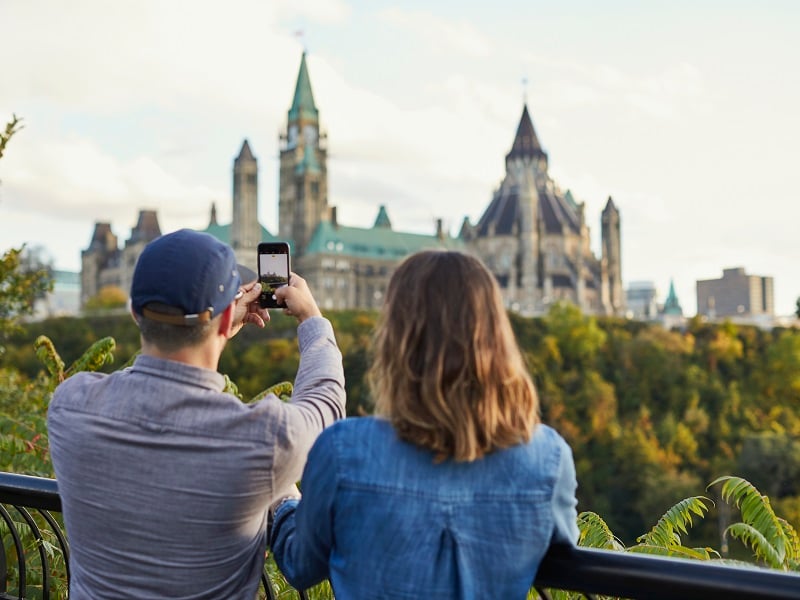
Day one, morning: Parliament Hill and the Peace Tower
Start where Canada's story is told in stone. Parliament Hill, rising above the Ottawa River, is the political heart of the country and one of its most photographed landmarks. The Gothic Revival buildings, the copper roofs and the soaring Peace Tower make a striking sight at any time of year, and arriving early means you can enjoy the lawns and the river views before the crowds build.
A note worth knowing before you go: the Centre Block, home to the Peace Tower and the Library of Parliament, is undergoing a major, multi-year restoration, so interior access to some of the best-known spaces is currently limited. Visitors can still tour other parts of the Parliamentary precinct, including the temporary chambers used by the House of Commons and the Senate, but tours need to be booked and availability varies, so check what is open for your dates before you plan your morning around it. The exterior and the grounds remain well worth the visit in their own right.
In summer, the Changing of the Guard ceremony brings a splash of scarlet and brass to the lawns, and Canada Day on 1 July turns the Hill into the country's biggest birthday party. Even outside those dates, it is a place that rewards a slow wander.
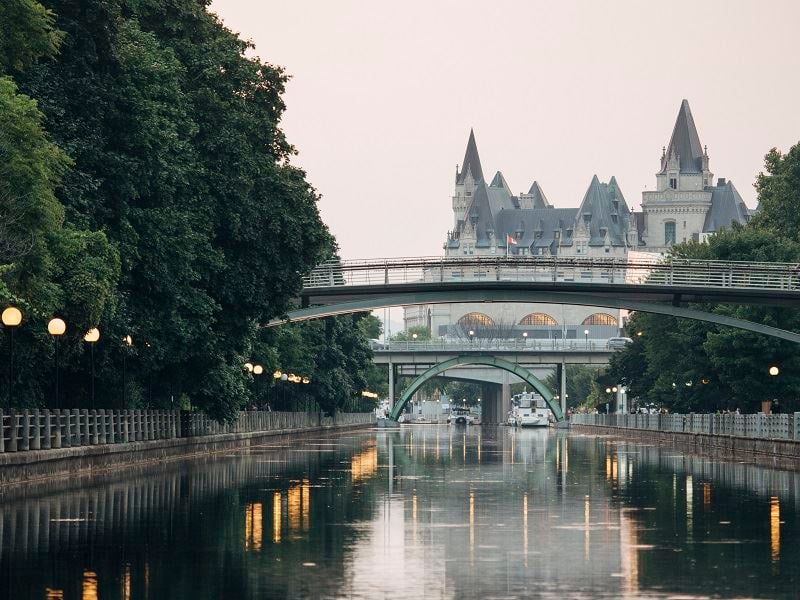
From the Hill, stroll down towards the Ottawa Locks, where the Rideau Canal drops into the river through a flight of eight stone locks beside the Fairmont Château Laurier. The hotel, which opened in 1912 and looks every inch the château, is one of the capital's grandest landmarks, and the locks are a lovely spot to watch the boats pass through in summer.
Day one, late morning: the Rideau Canal, a World Heritage waterway
The Rideau Canal is the thread that ties Ottawa together. Built in the 1820s and 1830s, it links the capital with Kingston, on Lake Ontario, over some 200 kilometres of lakes, rivers and locks, and it is a UNESCO World Heritage Site. It is also one of the oldest continuously operated canal systems in North America.
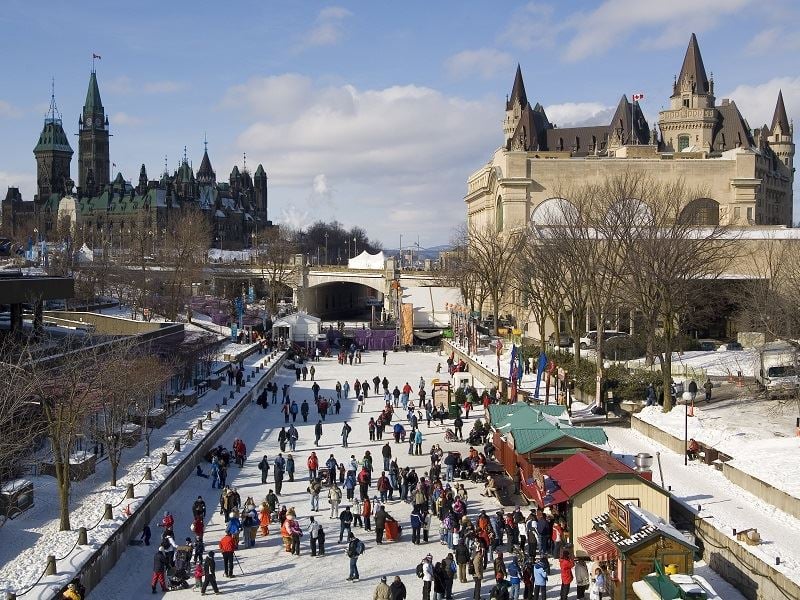
What makes it special for visitors is how much of it is part of everyday city life. Pathways run along both banks, so you can walk, jog or cycle beside the water through the middle of town. In summer you can take a cruise, hire a bike or paddle a canoe or kayak. In autumn the trees along the banks turn gold and red. And in winter, the canal freezes and becomes the Rideau Canal Skateway, a skating route of around 7.8 kilometres that is recognised as the largest naturally frozen skating rink in the world. Opening depends on the weather and ice conditions, typically from January to around the end of February, so it pays to check before you plan around it. Pair a skate with a hot chocolate and a BeaverTails pastry, and you have one of the great Canadian winter experiences.
Day one, lunch: the ByWard Market
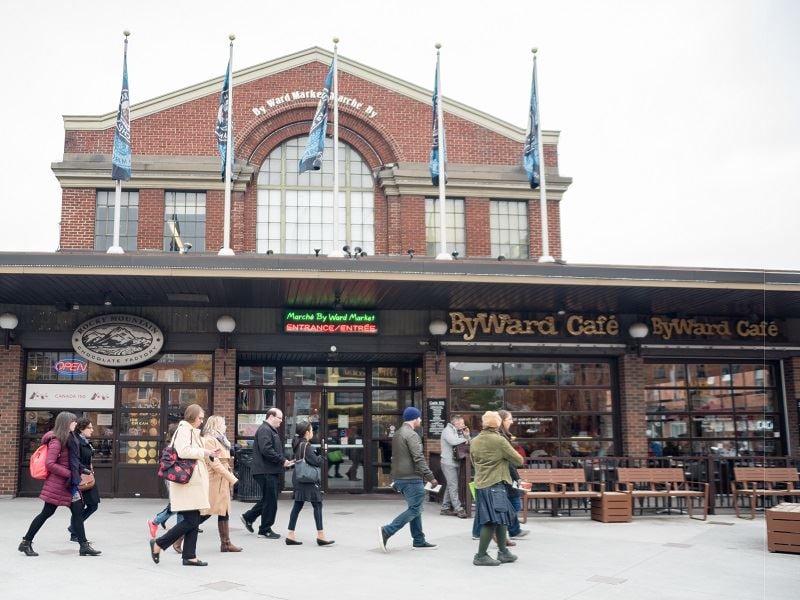
Walk north from the Château Laurier and you are in the ByWard Market, which has been operating since the 1820s and remains one of Canada's oldest and largest public markets. By day, it is a lively mix of produce stalls, artisan food shops, cafés and restaurants, with a decidedly local feel. By night, it becomes one of the city's best-known places for dining and drinks.
This is a good place to eat well without fuss. Pick up fresh produce and local cheeses, try a Canadian classic such as poutine, or settle in at a café and watch the city go by. With the Market as your base, you are also steps from some of Ottawa's best-known galleries and shops, so it works as a natural hinge for the day.
Day one, afternoon: art and local history
This is where Ottawa's depth really shows. The capital is home to a remarkable number of national museums and galleries, many of them within a short walk or a quick ride of each other. Even with two days you will not see them all, so we have split them across the itinerary: art and local history this afternoon, the larger national museums tomorrow.
For art lovers: the National Gallery of Canada is a striking glass-and-granite building overlooking the river, with a vast spider sculpture, Maman, by Louise Bourgeois standing guard outside. Inside you will find Canadian and international art, including a strong collection of Indigenous work and paintings by the Group of Seven.
If you prefer a smaller-scale stop, the Bytown Museum, housed in one of the oldest stone buildings in the city beside the Ottawa Locks, tells the story of Ottawa's origins as a canal-building town.
Day one, evening: dinner, and the city after dark
Back in Ottawa, the evening is yours to shape. The ByWard Market comes alive at night, with restaurants, pubs and patios offering everything from classic Canadian comfort food to international cuisine. For something a little calmer, Elgin Street and the surrounding neighbourhoods have a good mix of independent restaurants and cocktail bars, and the city's growing craft beer scene is easy to sample.
After dinner, take a walk. Parliament Hill and the canal are beautifully lit at night, and a stroll along the water makes a peaceful end to a busy day. When the summer festival season is in full swing, you may also find live music in the city's parks and open-air stages, and Ottawa's reputation for music festivals is well earned.
If you are staying at the Château Laurier or one of the downtown hotels, you will be perfectly placed to walk back in minutes.
Day two, morning: cross the river to Gatineau
One of the joys of Ottawa is how quickly you can slip into Quebec. A short walk or ride across the Alexandra Bridge, or a short taxi ride, puts you in Gatineau, where the language on the menus changes and the pace feels subtly different.
With a full morning to spare, Gatineau Park is one of the capital region's great assets. This huge expanse of forest, lakes and lookouts, a short drive from downtown, is a year-round playground: hiking and cycling in summer, spectacular colour in autumn, and snowshoeing and cross-country skiing in winter. Even a short visit gives you a sense of how close the wilderness is to the capital, a reminder of why Ottawa feels so different from a typical big city.
Day two, afternoon: the national museums
With a day already behind you, the larger museums are far easier to enjoy at an unhurried pace. Choose one or two rather than racing round them all.
For history and culture: the Canadian Museum of History, on the Gatineau shore with a superb view back towards Parliament Hill, is a natural choice. Its Grand Hall, with its towering Pacific Northwest Coast totem poles, is a highlight, and the museum is a good introduction to the people and stories that shaped the country.
For families and the curious: the Canadian Museum of Nature, with its dinosaurs and a whale skeleton, is a favourite with younger visitors, while the Canadian War Museum offers a thoughtful, powerful account of Canada's military history. If you have a keen interest in flight, transport or technology, the Canada Aviation and Space Museum and the Canada Science and Technology Museum are well worth a look.
Day two, late afternoon: one last look
With 48 hours nearly up, there is still time for a gentle finish. Wander through Major's Hill Park, which sits between the Château Laurier and the river and offers some of the best views of Parliament Hill, or take one more walk along the canal. Pick up a coffee and a pastry, and you have a calm end to your stay before the next leg of your journey.
Ottawa through the seasons
One of the best arguments for Ottawa is that it never closes. Each season offers something different.
Spring (April–May): The Canadian Tulip Festival, held each May, is the highlight. It began after the Second World War, when the Dutch royal family, which had spent time in Ottawa during the conflict, sent a gift of tulip bulbs as thanks, and it has grown into one of the world's largest tulip festivals, with beds of colour in Commissioners Park beside Dows Lake. Timing varies with the weather, so check dates before you book.
Summer (June–August): Long, warm days make this the peak season for outdoor cafes, festivals, canal cruises, cycling and kayaking. The Changing of the Guard takes place on Parliament Hill, and Canada Day on 1 July is a spectacle in itself. The Ottawa River and the surrounding countryside also offer whitewater rafting within easy reach of the city.
Autumn (September–October): Many travellers consider this the finest time to visit. Temperatures are comfortable, crowds ease, and the trees in Gatineau Park and along the canal turn a vivid mix of red, orange and gold. It is also an ideal time for cycling and walking.
Winter (December–February): Ottawa embraces the cold. The Rideau Canal Skateway, when conditions allow, is the star, and Winterlude, the city's winter festival held each February, brings ice sculptures, snow play areas and plenty of warming food and drink. Gatineau Park offers cross-country skiing and snowshoeing, and the city's cosy cafés and museums make the coldest days feel inviting rather than limiting.
In other words, there is no wrong time to go. Choose Ottawa for the tulips, the festivals, the colours or the ice, and you will find something to suit.
Why 48 hours is a good start
Forty-eight hours in Ottawa covers the essentials, but even keen sightseers will still find themselves making choices: the National Gallery or the Museum of History, Gatineau Park or one more museum. And we have barely mentioned the Ottawa River, the city's neighbourhoods, its farmers' markets, or its seasonal festivals.
That is why we recommend a minimum of two nights in the capital, and why we would never treat it as a one-night stop between Toronto and Montreal. Two nights lets you unwind rather than rush, and see the city in the evening light rather than just between check-out and check-in. Add a third and you can take a day trip out along the Rideau or the Ottawa River.
Ottawa also fits easily into a wider itinerary. It is around two hours from Montreal and roughly four to four-and-a-half hours from Toronto by road, with good rail links too, so it makes a natural bridge between the two. It also pairs beautifully with Quebec City, the Laurentians, the Thousand Islands or Algonquin Provincial Park. Whether you travel by train, by self-drive or with a mix of both, the capital slots in naturally.
Making Ottawa a destination in its own right
You do not have to combine Ottawa with somewhere else. With direct flights from the UK it is perfect for a short break, a city stay, a family trip built around museums or a winter getaway centred on the Skateway, Ottawa stands up perfectly well on its own. It is safe, easy to navigate, welcoming and full of things to do, with the added appeal of being one of the more affordable Canadian city destinations in many seasons.
Get in touch with the Canadian Sky team to start planning your time in Canada's capital, and discover why 48 hours is only the beginning.
Frequently asked questions
Is Ottawa easy to get around?
Yes. The main sights cluster around Parliament Hill, the Rideau Canal and the ByWard Market, so much of the city can be explored on foot. Pathways along the canal also make cycling easy in the warmer months.
How far is Ottawa from Montreal and Toronto?
It is around two hours from Montreal and roughly four to four-and-a-half hours from Toronto by road, with excellent rail links too. That makes it a natural bridge between the two cities.
Do people speak English or French in Ottawa?
Both. Ottawa is officially bilingual and sits on the Ontario–Quebec border, with the city of Gatineau just across the river. You will hear both languages, and visitors can get by comfortably in English.
What are the best museums in Ottawa?
Hard to say as there is such an excellent choice to suit all interests!



Sign up to our newsletter
Be the first to know about our exclusive offers and holiday inspiration by email.