
Circle Newfoundland & Labrador
Newfoundland and Labrador
12 nights
From
£4,449
pp

Written by: Kathryn, Brand and Partnerships Marketing Director
I've been at Canadian Sky for over 12 years, and Canada has been a constant throughout – but last June felt different. Two weeks exploring Atlantic Canada in a motorhome with my husband, covering Nova Scotia, New Brunswick and Prince Edward Island: quiet roads, scenery that shifts from rugged coast to rolling farmland, and the best seafood I've ever eaten. Here are the highlights.
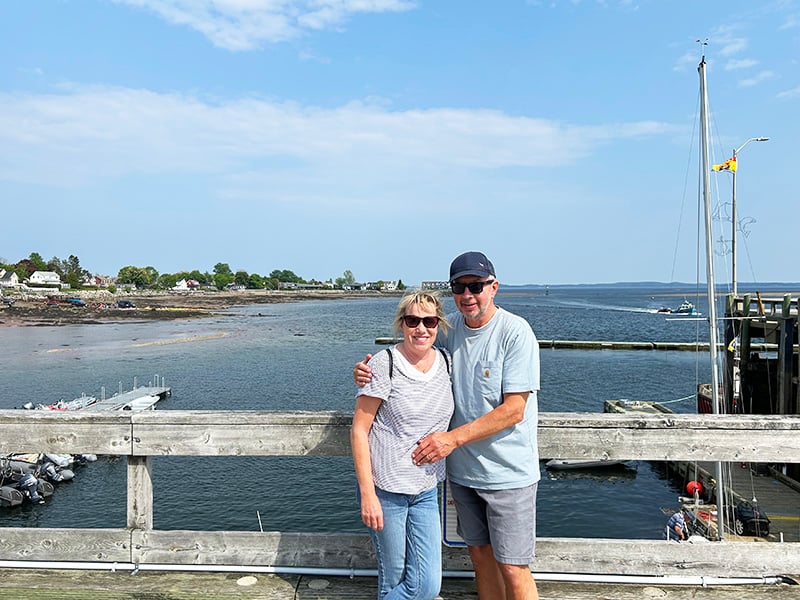
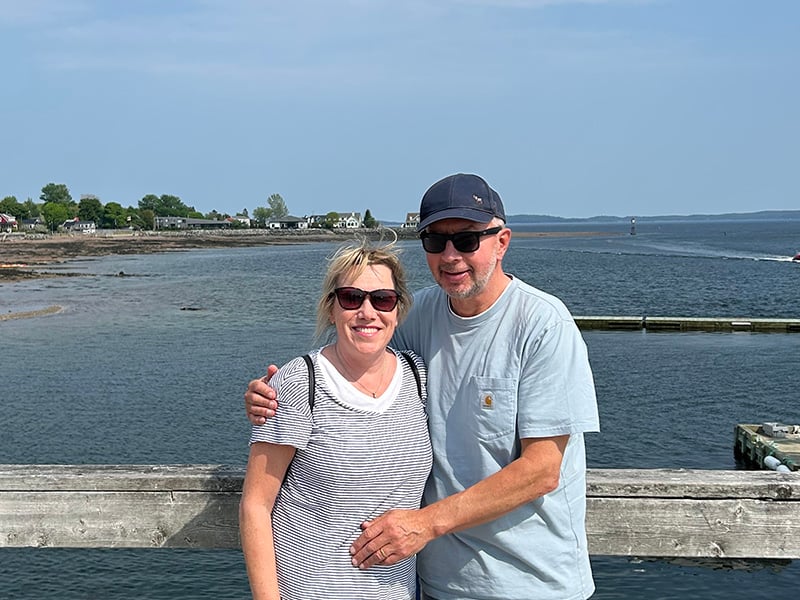
Kathryn and husband Nigel at St-Andrews-by-the-Sea, New Brunswick
We touched down at Halifax Stanfield International Airport after a comfortable overnight flight from London and felt the city's energy almost immediately. Halifax has a confidence to it – a proper maritime city that's earned its character rather than manufactured it.
Our first evening set exactly the right tone. We headed straight to Durty Nelly's Irish Pub on Grafton Street, where the craic is genuine and the crowd mixed – students, locals, visitors who clearly decided to stay longer than planned. Then we retreated to The Sutton Place Hotel Halifax, which delivers a level of elegance that still feels relaxed rather than stiff – ideal after a long-haul flight.
The next morning, we started gently at Café Lunette, a neighbourhood spot beloved by locals for good reason, before doing something deceptively brilliant: taking the Halifax Harbour ferry across to Dartmouth. It costs almost nothing, takes about twelve minutes, and gives you one of the finest views of the harbour and its working waterfront that you simply can't get from shore. Don't skip it.
Back on the Halifax side, the Maritime Museum of the Atlantic was more engaging than we expected. The Titanic section is genuinely affecting – Halifax played a central role in the recovery efforts, and the exhibits are handled with real care and solemnity. Lunch was lobster poutine at The Waterfront Warehouse (don't overthink it – just order it), followed by a browse through local craft stalls and a visit to the Canadian Museum of Immigration at Pier 21, which tells the story of more than a million immigrants who first set foot in Canada on that very spot. We ended the day as any sensible visitor should: with a craft beer at Garrison Brewing Company, one of the east coast's finest.
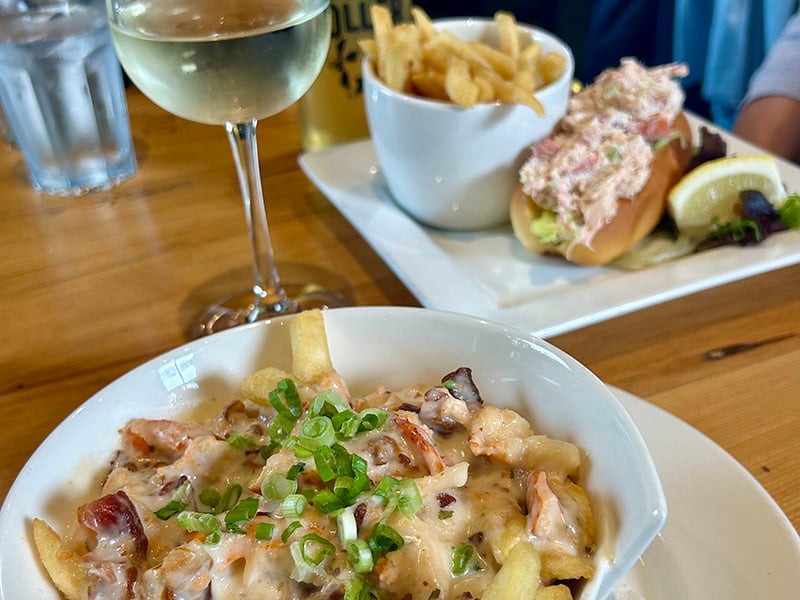
Lobster poutine, lobster roll and a glass of Nova Scotian Tidal Bay, at the Waterfront Warehouse, Halifax
The real adventure began when we collected our motorhome from Cruise Canada – a reliably professional outfit with well-maintained vehicles and staff who actually take time to walk you through everything. We opted for the C25 model, which comfortably accommodates a family of four. For the two of us, it felt almost luxurious.
Before hitting the road, a quick stock-up is essential. We found a Sobeys supermarket nearby for food, and an NSLC store (Nova Scotia Liquor Corporation) for drinks – this is your go-to for wine and beer in Nova Scotia, so don't assume you'll find alcohol in a regular supermarket.
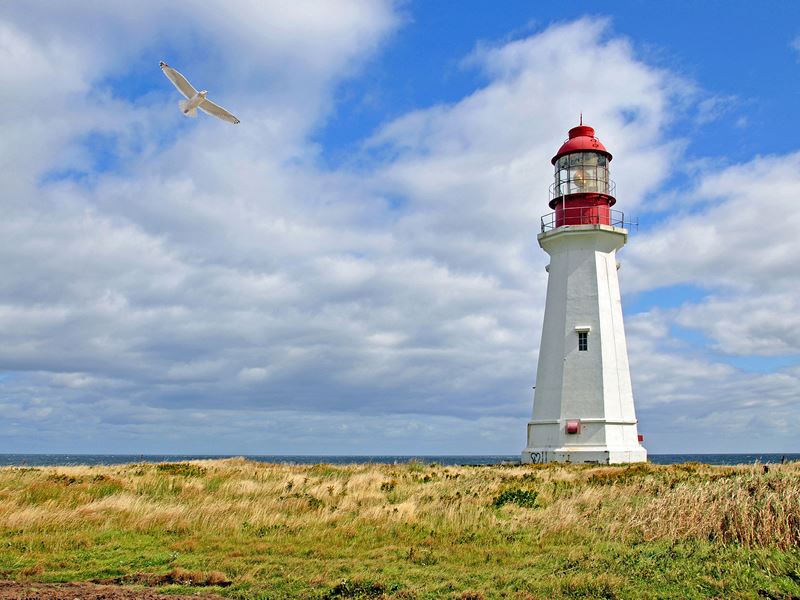
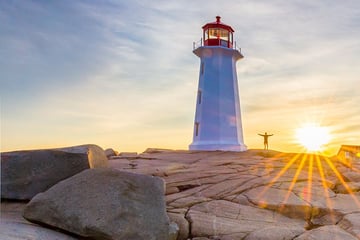
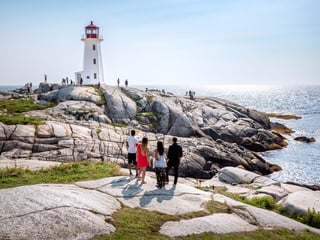
Our first stop was inevitable: Peggy's Cove Lighthouse. We'd both seen the photographs a hundred times, but the reality still stops you in your tracks. Those smooth granite rocks, the weathered red and white lighthouse, the cold Atlantic crashing below – it's one of those rare spots where the postcard doesn't do justice to the place. The parking situation has been well organised in recent years, so it's far less stressful than it once was – park up, walk through the village, take your time.
From there, we drove to Lunenburg, a UNESCO World Heritage Site that wears its designation lightly. The colourful wooden buildings cascade down toward the harbour, the streets are dotted with independent shops and galleries, and the whole place has an unhurried confidence. Our first night in the motorhome, parked at a small campsite just outside town, was exactly what we'd hoped for: quiet, uncomplicated, and the perfect gentle introduction to life on the road.
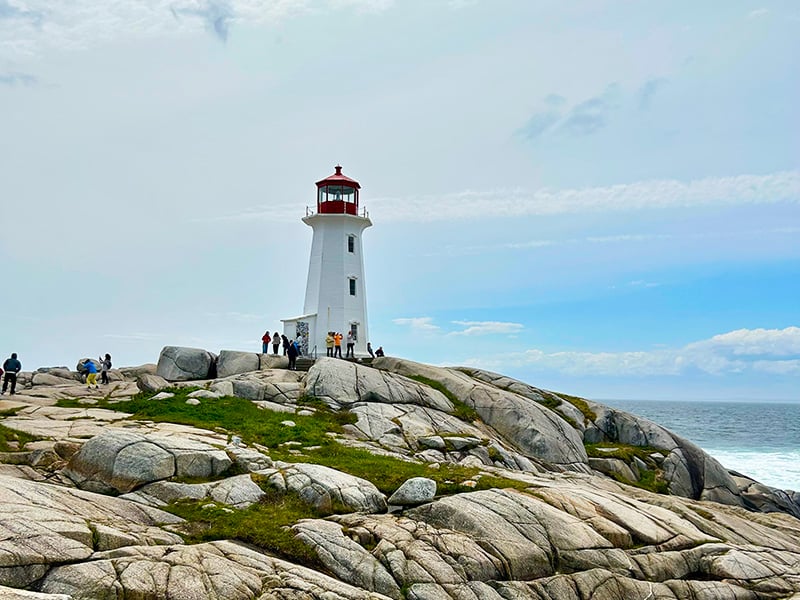
Peggy's Cove, Nova Scotia
Heading inland, Kejimkujik National Park offered the kind of peaceful woodland walking that genuinely resets you. Ancient Acadian forest, river canoe trails, birdsong – and the slow, satisfying realisation that one of the great joys of motorhome travel is the freedom to stop wherever you want. Lunch on a forest trail with a proper cup of tea and nowhere to be? You can’t beat it.
We continued to Digby, a small coastal town with serious scallop credentials – the Digby scallop is considered among the finest in the world, and a dinner here should absolutely feature them. We settled into a waterfront campsite for a couple of nights and spent the time doing very little, very happily.
The ferry crossing from Digby to Saint John is more than a practical connection – it's an experience in its own right. The Bay of Fundy holds the record for the highest tidal range on the planet, with water levels rising and falling by up to 16 metres. The crossing takes around two and a half hours, and we recommend, with some enthusiasm, ordering the scallops and chips onboard. You're in Digby country – it would be rude not to.
From Saint John, we drove to St. Andrews-by-the-Sea, and it charmed us completely. It sits just a few miles from the Maine border and carries a certain New England elegance – wide shaded streets, heritage architecture, a waterfront that feels genuinely timeless. But it has its own warmth, too, that particular New Brunswick hospitality that you notice precisely because it's unperformed.
We swapped the motorhome for an overnight at the Treadwell Inn, a boutique property with real character. Dinner there was one of the absolute highlights of the entire trip. The beer-baked oysters arrived looking almost too good to eat, and then proceeded to taste even better than they looked. If you visit and don't order them, we'll be quietly disappointed in you.
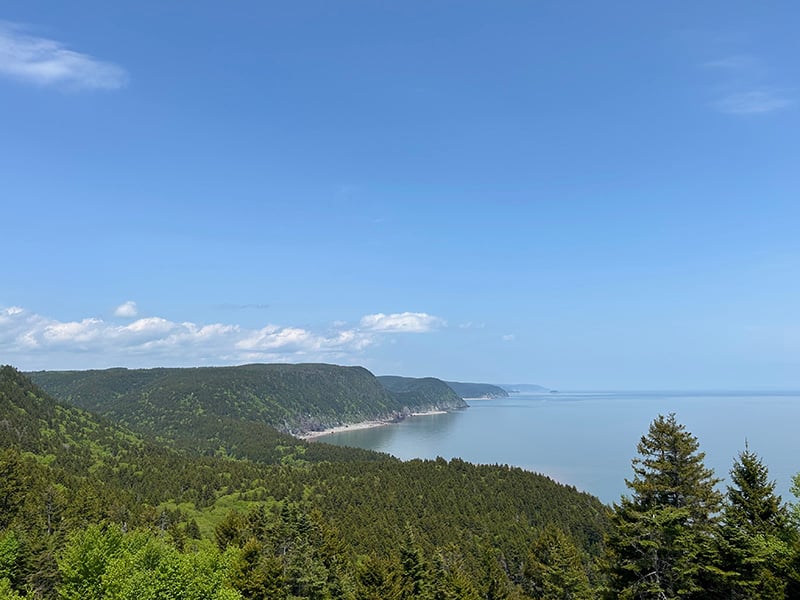
Fundy Park Trail Provincial Park, New Brunswick
The drive north along the Bay of Fundy coastline is one of those routes that keeps surprising you. We pulled into St. Martins, a tiny settlement on a beautiful bay of deep reddish sand – the same iron-rich colour you'll see throughout New Brunswick – and found the sea caves that the area is known for. We treated ourselves to lobster rolls and cold local beer on the terrace of the beach café, looking out over a bay that felt entirely our own.
The Fundy Trail Parkway, which follows the coast north of St. Martins, is exactly what slow travel is supposed to feel like. A beautifully designed coastal drive with consistent viewpoints, walking trails dropping down to secluded beaches, and a pace that actively encourages you to stop. Often. We'd recommend allocating the best part of a day here.
Then came Hopewell Rocks – and honestly, nothing quite prepares you for it. At low tide, you can walk on the ocean floor and wander among extraordinary "flowerpot" rock formations: towering columns sculpted by millennia of tidal erosion, some topped with trees clinging to the summit. Return at high tide and those same formations are partially submerged, with kayakers paddling above what was, a few hours earlier, dry land you were walking on. It's a genuine wonder. Crucially, your admission ticket is valid for two consecutive days – if your schedule allows, time your visits to catch both extremes. The contrast is worth it.
We spent that night deep within Fundy National Park, surrounded by forest, eating a relaxed seafood dinner in the village of Alma, where the lobster shacks are simple and the food is not.
The next day brought one of those experiences that sounds gimmicky until you're actually there: Magnetic Hill in Moncton, where your vehicle appears to roll uphill on its own. It's an optical illusion created by the surrounding landscape and it's genuinely, stubbornly convincing even when you know exactly what's happening. There's a winery nearby at the Magnetic Hill complex too – we lingered over lunch, the non-driver sampling a selection of surprisingly accomplished local wines.
From there, we drove to Shediac – a town that claims the title of Lobster Capital of the World with considerable pride, and frankly, some justification. The giant lobster sculpture in the town centre is obligatory. Weather unfortunately scuppered our planned lobster boat excursion, but the coastal setting and the town's easy-going character made it a pleasure regardless.
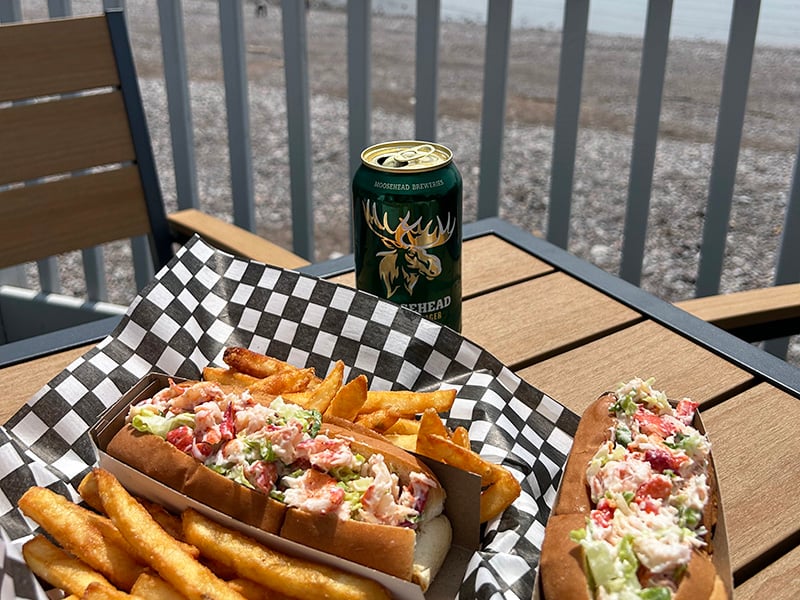
Lobster rolls in Shediac
Crossing the Confederation Bridge onto Prince Edward Island feels like arriving somewhere different – quieter, softer, a landscape of red-earthed farmland, wild north shore dunes, and a pace of life that feels genuinely uncrowded. Canada's smallest province is, we'd argue, one of its most underestimated.
A visit to Green Gables Heritage Place in Cavendish is lovely even if you've never read Lucy Maud Montgomery's novels – although if nothing else I would recommend listening to the audio book during the preceding days driving! The house and grounds are beautifully maintained and the surrounding parkland is genuinely pretty.
The north shore offered scenic walks through PEI National Park, where red cliffs meet long sandy beaches and the sea birds move in unhurried circles overhead. We found exceptional seafood chowder at a small spot near Brackley Beach that we're not going to pretend we can remember the name of, but which we'd happily eat again every day for a week.
That evening, we checked into Dalvay by the Sea – a grand Victorian-era heritage inn set within the national park, all wraparound verandas and period character, with a restaurant that more than lives up to its setting. It's the kind of property that doesn't need to try very hard because it already has everything.
PEI National Park itself deserves more than a passing mention – beautiful sandy beaches, rolling dunes, inland walking trails, and birdlife that will delight anyone travelling with binoculars. It's a quiet gem that the island wears without fanfare.
A ferry from Wood Islands carried us back to Nova Scotia and onto what many seasoned travellers consider the finest drive in eastern Canada: Cape Breton Island.
The Cabot Trail is not, as it turns out, something that can be adequately prepared for. The road climbs high above the Gulf of St. Lawrence, sweeps through Cape Breton Highlands National Park, and delivers viewpoints that make you want to pull over every ten minutes. We did, in fact, pull over every ten minutes. The hiking trails drop into river valleys and coastal headlands that feel genuinely remote even when you know the road is never far away.
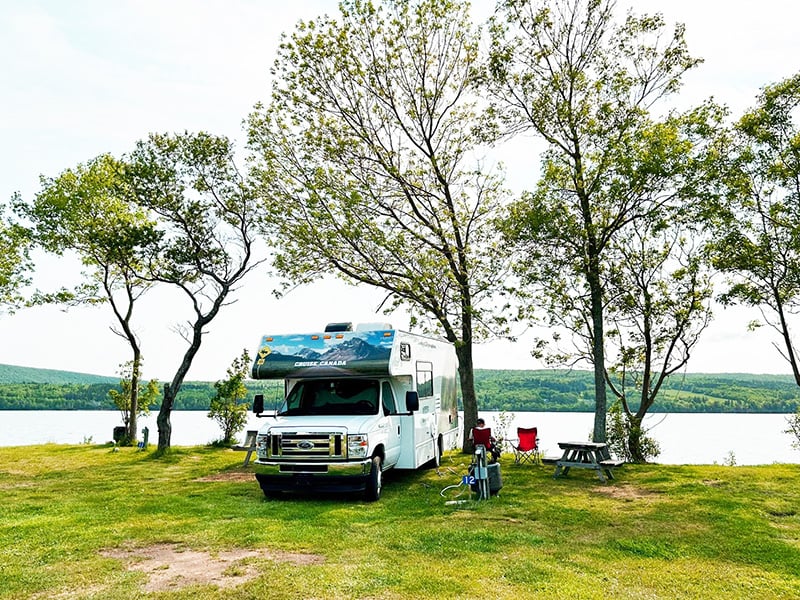
East Lake Ainslie, Cape Breton, Nova Scotia
Atlantic Canada rewards travellers who are happy to slow down. The region isn't about ticking off sights – it's about leaving enough room in the day for the unplanned stuff. A chat with a lobster fisherman on the harbour, a roadside seafood shack that wasn't in any guide, a coastal viewpoint you stumbled across by accident. In our experience, those are the moments you end up talking about most when you get home.
At Canadian Sky, we can arrange motorhome hire through Cruise Canada (the same operator we used ourselves). We'll also take care of the flights, any hotel nights at the start or end of your journey, and can book in activities and excursions to fit in with your itinerary.
This is a journey that deserves to be done properly. We'd love to help you do exactly that.
Kathryn, Brand and Partnerships Marketing Director. Kathryn has visited Canada 12 times and counting, and Atlantic Canada holds a special place among all of them. With a culture rooted in Celtic influences, she finds the people warm, funny and genuinely hospitable – and as a devoted seafood lover, the region's farm-to-fork restaurants and freshly caught lobster keep drawing her back.
Canada as a whole has been a constant in Kathryn's travel life: summer kayaking on the lakes and rivers, whale watching on the coasts, and winter snowshoeing through the forests of Alberta. The vastness of the scenery is part of the appeal – but so is the fact that Canada is brilliantly set up for outdoor exploration, with well-marked trails and a sense that there's always more to discover.
June to September – it’s quite a short season in this region, and outside of these months not many attractions or activities are operating. The weather is also much better in these summer months.
No special licence is needed, and motorhomes are simpler to drive than most people expect. The main thing to get used to is the size – they're wide vehicles with prominent mirrors – but it comes quickly. Canada is well set up for motorhome travel, drivers are used to sharing the road with them, and people are genuinely helpful if you need it. We were also pleasantly surprised by how straightforward the ferry crossings were – far easier than anticipated.
An Atlantic Canada motorhome holiday covers the three provinces of Nova Scotia, New Brunswick and Prince Edward Island, but not Newfoundland and Labrador – you’d have to explore that province by car or escorted tour. It’s possible to do a lovely loop in 10 days, but to enjoy a couple of nights in different locations and to properly experience the region we would recommend 14 to 21 nights.
As with any holiday to Canada – lots of layers! The weather is very variable and you really can experience four seasons in one day, particularly in the spring and autumn. It’s a very informal holiday and you won’t need to dress up, so bring comfortable clothes and shoes and a waterproof jacket. There’s always opportunities for swimming and kayaking so bring swimwear and a beach towel. You’ll also want a pair of plastic flip flops for visiting the shower block. You’ll be able to buy toiletries and essentials when you do your first grocery shop at the beginning of your holiday.

Sign up to our newsletter
Be the first to know about our exclusive offers and holiday inspiration by email.